

Agrony Trading LLC
Add a review FollowOverview
-
Sectors YouTube Views

Company Description
How Much Do Large Pallets Experts Earn?
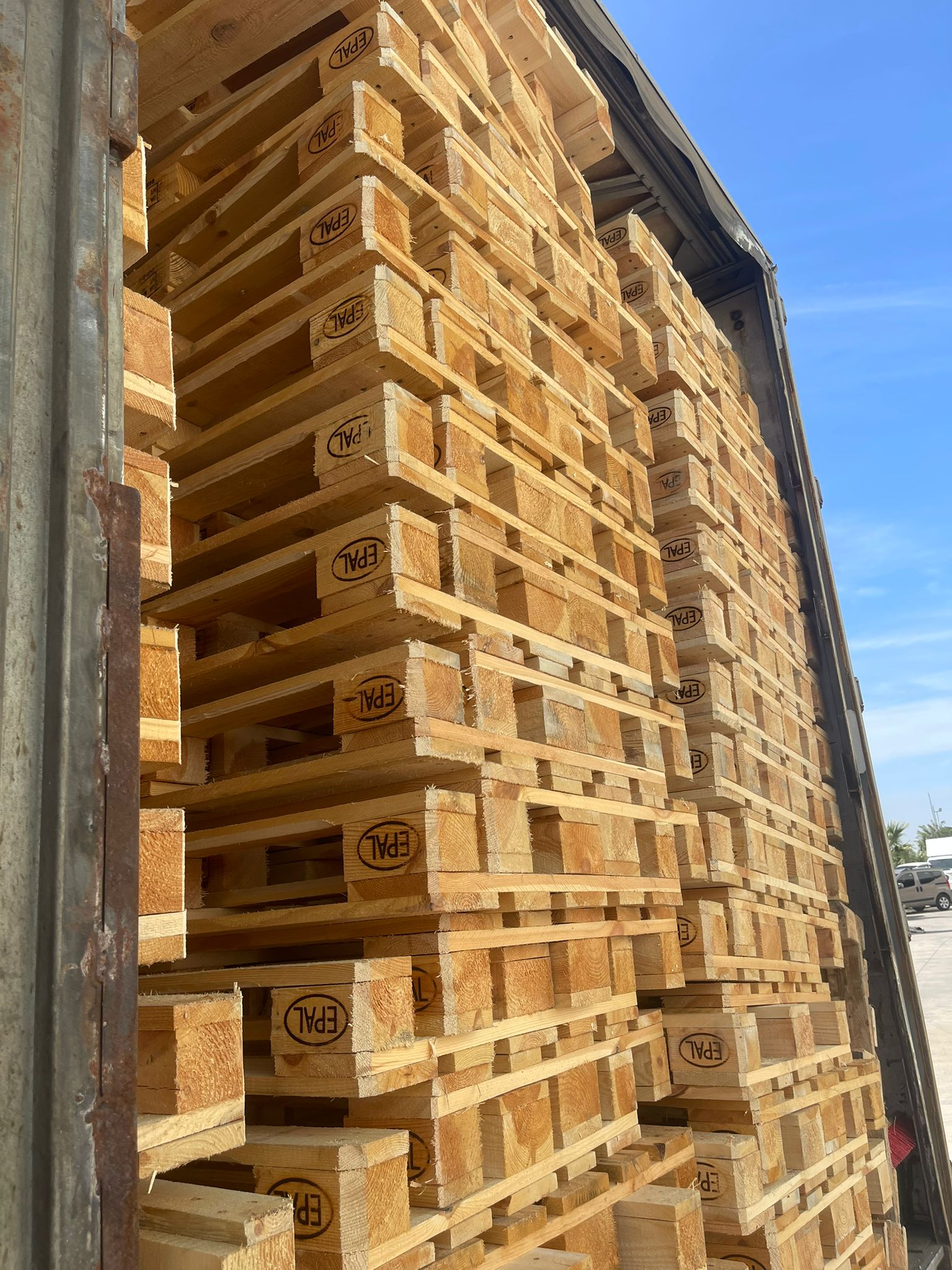 The Importance of Large Pallets
Two billion wooden pallets are used to move across the globe. They’re in the holds of tractor-trailers, transporting Honey Nut Cheerios and oysters, penicillin and penicillin. They’re in a storage yard, tucked away behind supermarkets and scurrying through warehouses.
These pallets have unintentional cost that is they host pests that are invasive. And these pests are causing ecological damage.
48 20 Pallets
Depending on the sector, various sizes of pallets are used to transport goods. In the consumer packaged goods industry, for example, the 48″x40 pallet that is based upon the GMA standard dominates logistics. It accounts for more than 30 percent of all new wooden pallets made in the United States each year. The dimensions of the pallet are consistent with standard door widths and dimensions of trucks, ensuring efficient loading and unloading processes. It is also a popular item in the secondary market due to the fact that it is able to be used and resold elsewhere which reduces costs and waste.
This size is also compatible with regional logistics infrastructure. For instance, it can work with standard racking systems and forklifts, and its rectangular shape makes the most of the storage space of trucks and spaces.
There are various sizes of pallets across the globe. One of them is the euro block pallet. It’s an 800 mm by 1200 mm size that’s utilized in Europe. This pallet size is a reflection of the fact the fact that Europe uses metric measurements, and its smaller dimensions are more compatible with European logistics systems.
The construction of a pallet is crucial. For large loads, a double-face pallet is more stable and reduces the chance of breaking. It’s also easier to set down, as the operator doesn’t have to be concerned about which side is up. While a single-face pallet is fine for lighter loads, it’s not recommended for heavy duty use.
While the standard dimensions for pallets are standard for all industries, there are differences in other features. For example, some pallets are either four-way or two-way which determines whether they can be accessed in one direction or the other by forklifts or pallet jacks. These details are important for ensuring the safety of your goods and equipment during transportation.
A specific specification is required when you ship chemicals. These specifications are based upon the chemical type and handling requirements. These specifications are enforced by industry organizations, and they vary from CP1 to CP9. CABKA will be showing a number of pallets at the PACK EXPO this year that can meet the requirements of different industries and include the 400 series, a nipping square pallet designed to maximize container utilization with no wasted space for cargo. Other models, such as the CPP 130, a first-of-its-kind lightweight pallet that can be nestled and is compatible with all roller and chain conveyor systems, will be on display.
40”x40 Pallets
The 48-by-40 pallet is a great choice when you require a large pallet that can hold several containers of liquid. This pallet size is utilized in a variety of industries that range from food to beverage and offers four ways of entry. This pallet can also accommodate a variety sizes and shapes, so you’re certain to find one that is suitable for your needs.
Pallet sizes differ significantly across different regions, however there has been an increasing trend towards standardization within the industry. There are now international standards for sizes of pallets that are common across countries. While each country has its own distinct pallet dimensions there is also an agreed upon standardization of these dimensions that allows seamless cross-border logistics and trade. The globalization of commerce has led to a need for pallets that conform to a standard and can accommodate different container sizes and types.
Pallets come in many shapes and sizes, but the 48-by-40 is one that is often forgotten. These pallets are used for transporting beverages and are also used in the chemical and automotive industries. They have a large load capacity and are suitable for the majority of storage facilities.
The 48-by-40 Pallet is a cornerstone in the North American food and beverage industry. Its dimensions are compatible with door and truck widths that are common. It is perfect for transporting bulk items, such as soda or water bottles and is able to be easily removed and loaded onto trucks and trailers. It is also well-liked in the secondary market due to the fact that it can be reused and reused, reducing waste and saving money.
Pallets are available in different grades, but the top grade is the highest quality and value. The AA grade may show signs of wear. The B-grade pallets have seen some repairs, and they usually include a single stringer and plugs made of steel which are used to repair damaged deck boards. These pallets are still suitable for most storage environments but they might not work as effectively as top-quality.
48”x48″ Pallets
Pallets are the base of nearly every product shipped around the world. Pallets are essential to supply chains and logistics as they enable companies to store and ship their products in large quantities. They also offer a secure and sturdy platform for shipping, protecting the quality of the goods from the time they are stored until they are in distribution.
While there are many types of pallets, the 48”x48” size is among the most popular sizes used by companies. This size is ideal for storing and transporting large shipments of product, and it is easily compatible with most shipping and warehouse equipment. This pallet’s rectangular shape maximizes storage capacity and can be transported by forklifts or pallet jacks.
The majority of pallets are made from wood, and are designed to support heavy loads without being damaged or falling apart. They are also simple to repair and are an ideal choice for international shipping. They are often used to comply with ISPM15’s export specifications. Wood pallets are reusable and can be converted into biomass fuel at the conclusion of their useful lives.
Another type of pallet is the one with an aluminum encasement, which is specifically designed to transport military equipment. This style of pallet has a double-face design that is more straightforward to set up than traditional stringer pallets. The double-face design also reduces the amount of shifting moving which makes it safer for the goods being transported.
A specialized type of pallet is the automotive pallet that is used to store and transport auto parts and components. These pallets are usually custom-designed for auto parts with unique shapes and sizes. In addition, they are often constructed to withstand the heavy weight of these items and prevent them from breaking down because of chemical corrosion.
The GMA pallet is another common type, accounting for around 30% of the pallets that are used in the United States. This pallet is 48″ 40″ x 48″ and can hold up to 4,600 pounds. It comes with two-way and four-way entries, which determine whether pallet lift trucks or jacks are able to access the pallet from both sides.
48”x50” Pallets
Pallets are portable platforms that serve as a base to stack and ship goods. Pallets are usually made of wood or plastic and designed to be lifted using pallet jacks or forklifts. Pallets play an important part in global supply chains. They can reduce logistical costs, and help accelerate distribution. They are also used to keep inventory safe and organized, which reduces loss due to spills or damage during transportation.
The most popular pallets are made of Wooden palette, which is popular due to their durability and value. They can be repaired and reused which extends their lifespan and reducing waste. Plastic pallets are more expensive and only suitable for certain applications.
Standard pallets are available in a variety of sizes to suit different needs The most well-known being GMA-approved 48”x40” pallets. These pallets are widely used in North America, as they correspond to standard door and truck dimensions. They are simple to load and unload. They are also popular in the secondary market in which they can be sold or reused at the end of their lifespan.
For specialty applications, specially-designed pallets can be used to transport special products or shipment. Glass pallets, for instance, are designed to transport and store bottled beverages. Can pallets are, on the other hand, are sized to transport beer and soda cans. These pallets for special use are typically made with a smooth-topped top to prevent bottles and cans from sliding and rolling on the floor of the trailer.
Another kind of pallet that is specialized is the chemical-resistant one, that is used to transport dangerous liquids and chemicals. These pallets are made from treated wood in order to minimize the risk of contamination or corrosion. They are often also examined for structural integrity to ensure that they can withstand the pressure loads these products will encounter during transit and storage.
Whether you’re shipping your product in full or part truckloads it’s crucial to select the right pallet size. If the pallets aren’t big enough they will not be able to accommodate your weight, and will likely collapse due to the weight of a large box over time. Likewise, if the pallets are too big they will occupy more space in your truck and will be difficult to stack. The rigidity of a pallet is also a factor, as it determines how much the pallet will bend when it is filled with boxes.
